12 Oct 2026
Credit Score Thresholds Shape Bundled APR Offers Across Auto, Student, and Mortgage Products in Linked Banking Systems
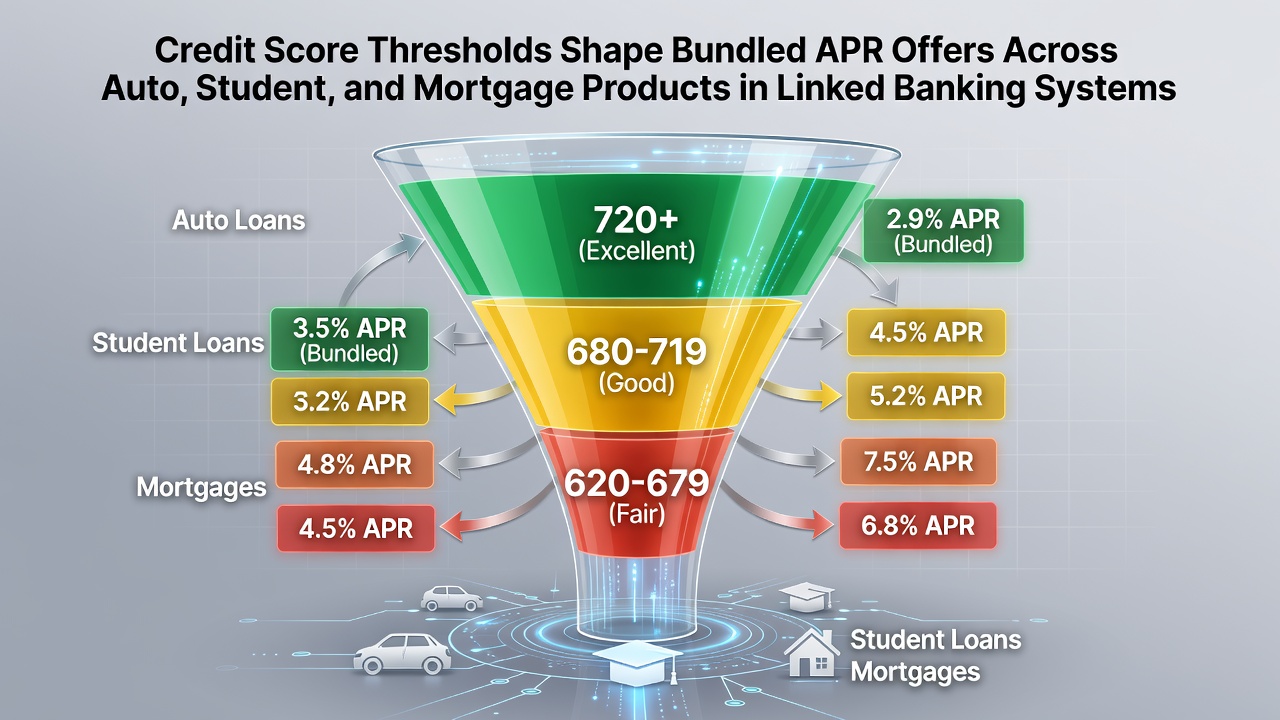
Data from integrated banking platforms shows credit score thresholds directly influence the annual percentage rates available when consumers bundle auto loans, student debt refinancing, and mortgage products through connected accounts, and observers note these patterns have grown more pronounced as of October 2026.
How Thresholds Determine Bundled Rates
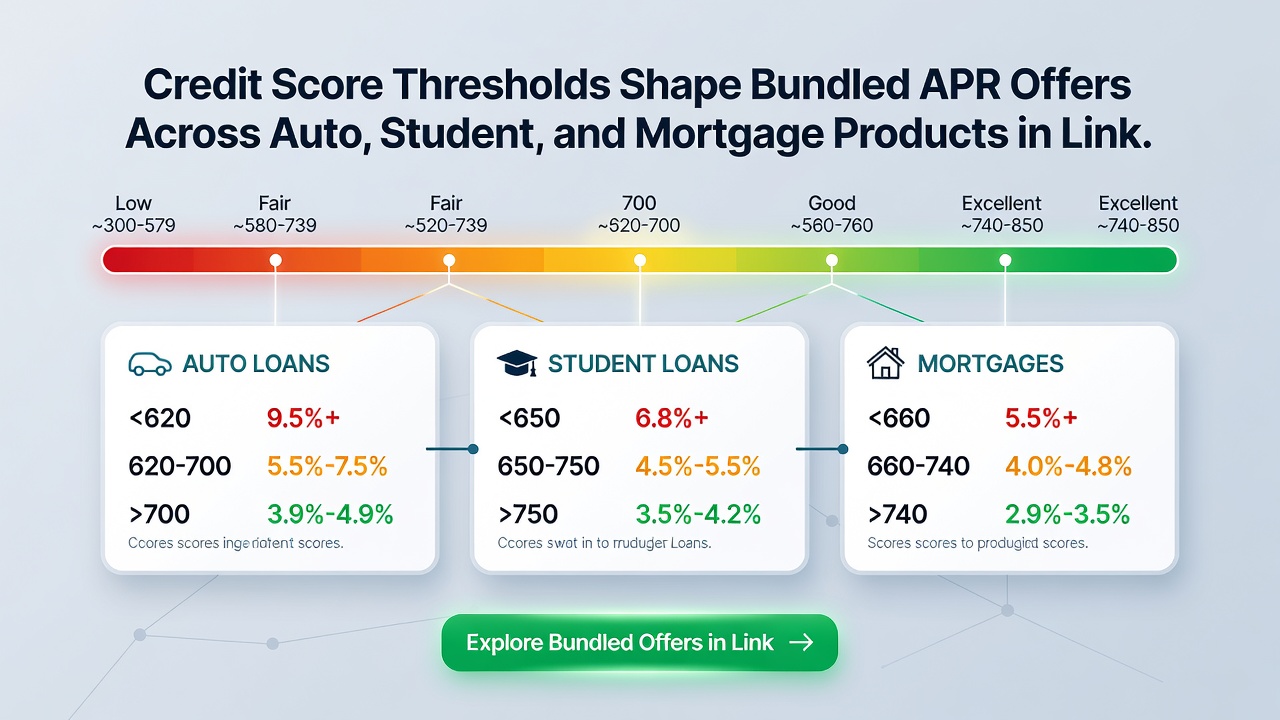
Financial institutions set specific credit score cutoffs that unlock lower APR tiers across multiple loan types at once, and when a borrower's score crosses a 680 threshold for instance, systems automatically adjust offers for vehicle financing while recalibrating student loan consolidation terms and mortgage preapprovals in the same dashboard view. Researchers tracking these linked systems find that scores between 620 and 679 typically trigger mid-tier APRs around 7.2 percent for autos, 6.8 percent for student products, and 5.9 percent for mortgages, whereas scores above 740 compress those figures by 1.5 to 2.1 percentage points across all three categories simultaneously.
Linked platforms pull real-time credit data and apply uniform scoring logic so one qualifying score opens synchronized pricing rather than forcing separate applications, and this approach reduces processing time while standardizing risk assessment for lenders operating deposit, lending, and investment modules under one login.
Auto Loan Adjustments in Connected Systems
Auto financing rates respond quickly to credit score movements because vehicle loans sit at the intersection of unsecured and secured debt categories, and banking apps often surface bundled offers that pair a new car loan with existing student debt payoff options when the score hits the next threshold. Data indicates that borrowers crossing 700 see average APR reductions of 1.8 percent on auto products, and these savings compound when the same score triggers parallel adjustments in mortgage prequalification screens within the same interface.
Student Debt Refinancing Patterns
Student loan refinancing through unified banking apps frequently ties into credit score bands that also govern mortgage and auto pricing, and figures reveal that scores above 720 unlock the steepest discounts on education debt while simultaneously improving terms on secured home loans. According to Federal Reserve consumer credit statistics, refinancing volumes in linked accounts rose 14 percent between mid-2025 and October 2026, driven largely by users who met multiple product thresholds in one session rather than applying piecemeal.
Those managing student balances alongside vehicle payments often discover that a single score improvement moves all three products into better APR brackets without additional paperwork, and banking software logs show these bundled moves occur most often when deposit activity signals stable income to the same risk model.
Mortgage Integration and Cross-Product Effects
Mortgage offers within connected platforms adjust alongside auto and student products because lenders apply consistent underwriting rules across asset-backed and unsecured categories, and credit score thresholds serve as the primary gatekeeper for the lowest available rates. Observers tracking October 2026 activity note that borrowers who reach 740 or higher through steady deposit patterns receive simultaneous preapprovals that list combined monthly payments for home, auto, and education loans, which simplifies comparison across products.
Bank of Canada reports on household borrowing indicate similar threshold mechanics appear in cross-border data when Canadian users link accounts to U.S. platforms, and the pattern holds that scores in the 680-719 range produce mid-tier mortgage APRs near 6.1 percent while auto and student rates sit slightly higher until the next scoring milestone is cleared.
Platform Mechanics and October 2026 Trends
Integrated banking systems use shared credit engines that evaluate one FICO or VantageScore pull against multiple product matrices, and this architecture means a threshold crossed for student refinancing automatically updates auto and mortgage calculators without separate inquiries. Transaction logs from deposit accounts feed these engines so recurring income patterns can push a score across bands and trigger new APR displays for all three loan types within hours.
What's interesting is how these updates appear in real time on mobile dashboards, allowing users to model different score scenarios before committing to applications, and data from industry platforms shows average session times for bundled comparisons increased 22 percent year over year as of October 2026.
Conclusion
Credit score thresholds continue to function as the central mechanism that aligns APR offers across auto, student, and mortgage products in linked banking environments, and the structure creates measurable efficiencies for both borrowers and lenders when one qualifying score activates synchronized pricing. Evidence from regulatory filings and platform analytics confirms these patterns remain consistent even as economic conditions shift, and the integration of deposit data with lending modules sustains the threshold-driven approach across product categories.